

How Often Should You Get Your Nails Infilled? Everything You Need to Know
Whether you love Acrylic Nails, BIAB or Gel Polish, regular maintenance is the key to keeping your nails looking beautiful and keeping them healthy.
One of the most common questions we hear at LooveBeauty is:
“How often should I get my nails infilled?”
The answer depends on the type of treatment you have and how quickly your natural nails grow, but keeping up with your appointments is essential. Waiting too long between infills can lead to lifting, breakages and even nail health issues.
Recommended Infill Schedule
At LooveBeauty, we recommend the following maintenance schedule:
- Gel Polish on Natural Nails: every 2–3 weeks
- BIAB (Builder Gel): every 3–4 weeks
- Acrylic Nail Extensions: every 3–4 weeks
- Gel Polish on Toes: every 6–8 weeks
Why Regular Nail Infills Are So Important
Many people think infills are simply about keeping their nails looking neat. In reality, they are an essential part of maintaining healthy nails.
1. Prevent Lifting and Bacterial Growth
This is the most important reason to keep up with your nail appointments.
As your natural nails grow, tiny areas of lifting can begin to develop between the product and your natural nail. Sometimes these lifted areas are almost impossible to notice yourself. Once lifting occurs, water, soap, oils and everyday dirt can become trapped underneath. This creates a damp environment where bacteria can grow.
One of the most common problems is green nail syndrome, which appears as a green or dark discolouration on your natural nail plate. This is usually caused by bacteria becoming trapped in areas where lifting has occurred. If lifting has been ignored for too long and this problem occurs, your nails would need to be removed and allowed to recover before a new set can be applied.
Regular infills allow your nail technician to safely remove any lifting before it becomes a problem.
2. Avoid the “Lever Effect”
As your nails continue growing, extensions gradually move further away from the natural stress point of your nail. This creates what nail professionals often call the lever effect.
The longer your nails are without maintenance, the more pressure is placed on the natural nail every time you type, open a door, pick something up or accidentally knock your hand. Instead of simply breaking the extension, the force can cause the natural nail underneath to crack or tear as well, which can be painful and may take months to fully grow out.
Regular infills restore the correct structure and balance of the false nails, making your nails stronger and less likely to snap.
3. Reduce the Risk of Onycholysis and Fungal Infections
Leaving false nails on for too long can also increase the risk of more serious nail problems.
When excessive lifting occurs, repeated pressure and moisture can cause the natural nail to separate from the nail bed. This condition is known as onycholysis. A separated nail creates an ideal environment for moisture and microorganisms to collect beneath the nail. Although fungal infections are not caused by nail products themselves, trapped moisture and poor maintenance can increase the risk of developing one.
What Happens During an Infill Appointment?
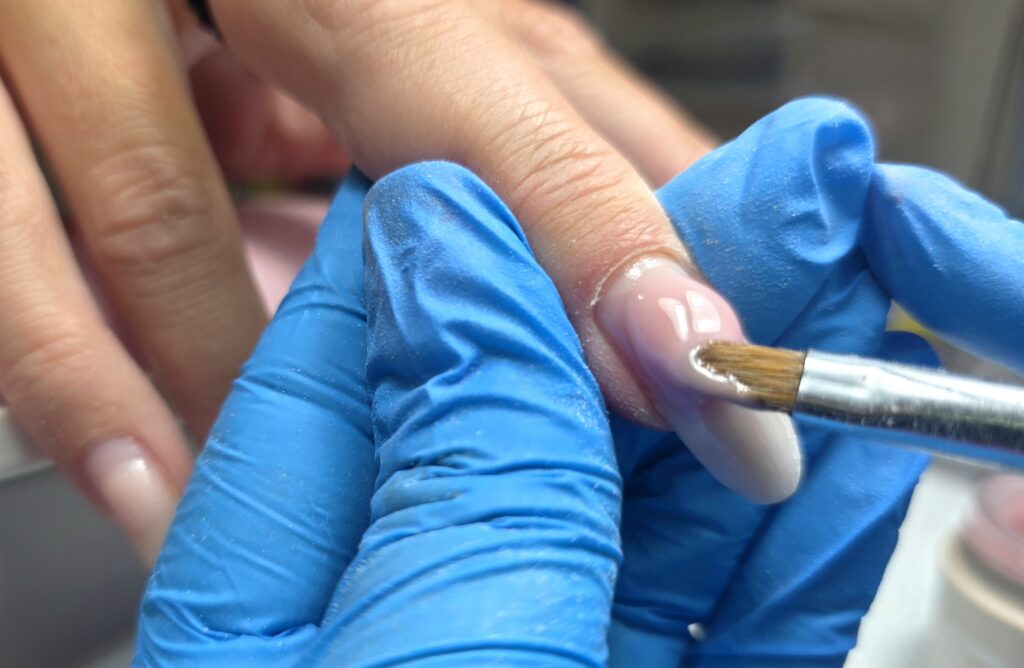
During your appointment, your nail technician will:
- Remove any lifting
- Assess the condition of your natural nails
- Rebalance the structure
- Replace any damaged product
- Refresh the colour or nail art if desired
- Finish with a beautiful, durable set that is ready for another few weeks
Can I Wait Longer Between Appointments?
While it may seem like you’re saving time or money by delaying your appointment, waiting too long often leads to repairs or even a full replacement set. If lifting becomes too extensive or several nails break, your technician may recommend removing everything and starting again rather than carrying out an infill. Regular maintenance is usually the most cost-effective option and helps protect the health of your natural nails.
Looking After Your Nails Between Appointments
To get the most from your manicure:
- Wear gloves when using cleaning products.
- Avoid using your nails as tools.
- Apply cuticle oil daily.
- Moisturise your hands regularly.
- Book your next appointment before leaving the salon.
Book Your Next Nail Infill at LooveBeauty
Whether you wear Acrylic Nail Extensions, BIAB, Gel Polish or Gel Toes, regular maintenance is the best way to keep your nails looking flawless while protecting the health of your natural nails.
At LooveBeauty, we carefully assess every set during your appointment, remove any lifting safely and ensure your nails remain balanced, strong and beautiful.
If it’s been a few weeks since your last visit, now is the perfect time to BOOK your next infill and keep your nails in their best condition.
Frequently Asked Questions
How often should you get your nails infilled?
Most clients should book an infill every 3–4 weeks for Acrylic or BIAB nails. Gel Polish on natural nails should be replaced every 2–3 weeks, while Gel Toes can last 6–8 weeks depending on growth and wear.
What happens if you leave your nails too long before an infill?
Leaving your nails for too long can cause lifting, allowing moisture and bacteria to become trapped underneath the product and cause a green nail syndrome. As the nails grow, they also become unbalanced, making them more likely to snap or damage the natural nail.
How do I know when I need an infill?
Signs it’s time for an infill include:
- A visible gap at the cuticle.
- Nails feeling longer and heavier.
- Small areas of lifting.
- Cracks or chips.
- Loss of strength.
Can acrylic nails last 6 weeks without an infill?
Technically yes, they can, but this isn’t recommended. After six weeks, the risk of lifting, breakage, bacterial growth and damage to the natural nail increases significantly.
Can BIAB be infilled forever?
Yes. As long as the product is maintained correctly and your natural nails remain healthy, BIAB can be infilled repeatedly without needing complete removal every appointment.
Can lifting cause green nails?
Yes. Lifting can allow water and bacteria to become trapped beneath the enhancement, sometimes causing a green discolouration known as “green nail syndrome.” Regular maintenance helps prevent this.
Can nail extensions cause fungal infections?
Nail extensions themselves do not cause fungal infections. However, if lifting allows moisture to remain trapped underneath the product for an extended period, it can increase the risk of infection.
What is onycholysis?
Onycholysis is when the natural nail separates from the nail bed. It can occur due to trauma, excessive pressure from overgrown nails, or prolonged lifting.
Is it cheaper to get an infill than a new set?
Yes. Regular infills are generally more affordable than removing the old product and applying a completely new set.
Should I remove lifting myself?
No. Picking or peeling lifted product can remove layers of your natural nail and make lifting worse. Always have lifting professionally removed.